
Internal Family Systems Therapy (IFS)
Many of the leading therapists and clinicians working at the intersection of mind and body — including those whose books and films you'll find throughout this resource library — point to Internal Family Systems Therapy (IFS) as one of the most powerful tools for addressing the emotional roots of chronic pain.
Here's why.
What Is IFS?
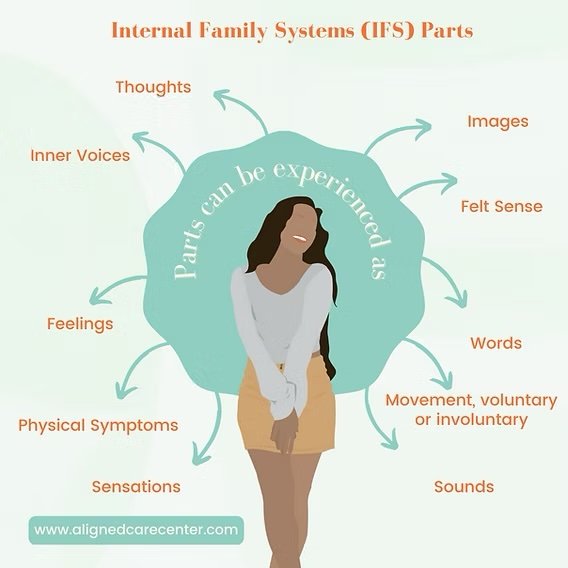
Internal Family Systems (IFS) is an approach to psychotherapy that identifies and addresses multiple sub-personalities — or "parts" — within each person's mental system. These parts consist of wounded aspects of the self carrying painful emotions like anger and shame, alongside protective parts that try to shield us from that pain. These sub-personalities are often in conflict with each other and with one's core Self — a concept describing the confident, compassionate, whole person at the center of every individual. IFS focuses on healing the wounded parts and restoring mental balance by changing the dynamics that create discord among them. PenguinRandomhouse.com
IFS was developed by psychologist Richard Schwartz, who began noticing patterns in how people described their inner lives. What he heard repeatedly were descriptions of conflicted subpersonalities — parts that resided within them. He began to conceive of the mind as a family, with the parts as family members interacting with one another. PenguinRandomhouse.com
The Three Types of Parts
According to the IFS model, parts often play three common roles. Managers are protective parts that control surroundings and manage emotions to navigate daily life. Exiles hold hurt, fear, or shame from early experiences — and managers aim to keep them hidden from conscious awareness. Firefighters activate when exiles produce overwhelming emotions, attempting to suppress that pain by any means necessary — sometimes through substance use, binge eating, or other avoidance behaviors. PenguinRandomhouse.com
Why IFS Matters for Chronic Pain
Here's what connects IFS so directly to the mind-body pain work: chronic pain often thrives in the same environment that IFS addresses — a nervous system under constant internal pressure, carrying emotions it was never allowed to process.
A randomized controlled trial found that IFS could help with pain, physical functioning, depressive symptoms, and self-compassion in rheumatoid arthritis patients. In 2015, IFS was designated as an evidence-based practice on the National Registry for Evidence-based Programs and Practices by the U.S. Substance Abuse and Mental Health Services Administration. PenguinRandomhouse.com
When we work with clients at Santa Barbara Chronic Pain Solutions, we often find that the most meaningful breakthroughs happen when people begin to understand the parts of themselves that have been holding fear, grief, or rage — and finally give those parts a voice rather than a flare-up.
Want to Learn More?
IFS therapy can treat individuals, couples, and families, and can effectively address depression, anxiety, panic, phobias, trauma, substance use, and physical health conditions. PenguinRandomhouse.com If you're curious whether IFS might be right for you, Psychology Today maintains a directory of IFS-trained therapists.
